
With pgvector, the HNSW graph index needs more memory as a table grows, which makes vector search in Postgres increasingly expensive to run. The pg_pinecone Postgres extension has lower latency than pgvector at the same recall and uses less memory, so it costs less to run as tables grow. The new Railway template for pg_pinecone gives developers Postgres with Pinecone's vector search built in, deployed in one click.
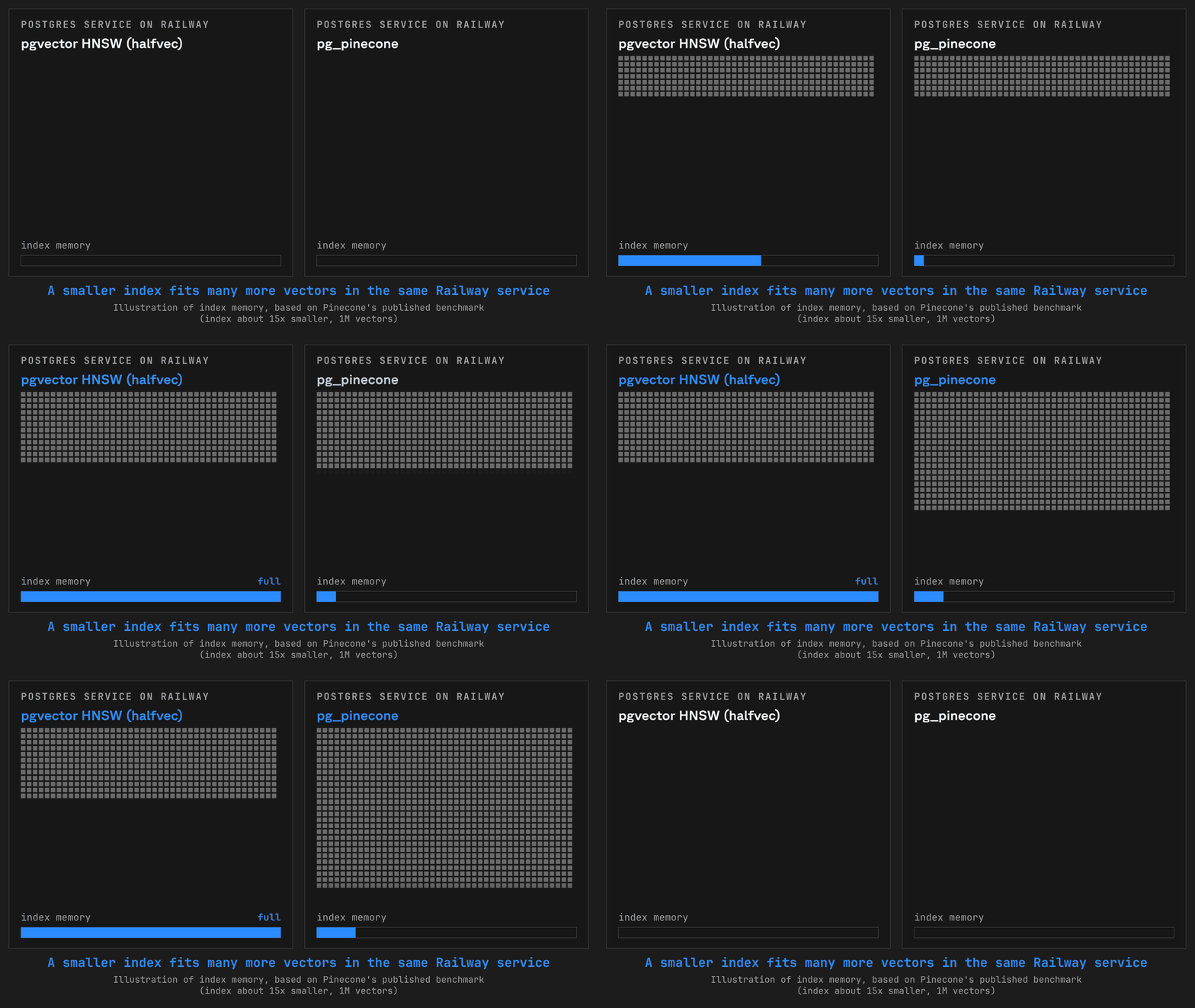
The Railway template runs Postgres 18 with pg_pinecone installed, preloaded, and enabled, so there's no extension to install or image to build. In our benchmarks on 1 million vectors, the pg_pinecone index was about 15 times smaller than a pgvector HNSW index using halfvec and returned results faster at the same recall. Railway bills for the memory and storage a service uses, so a smaller index lets the same Postgres service hold many more vectors for the same cost. When a table needs to scale, a Pinecone API key and one SQL call move its search to a serverless index in Pinecone's managed service, and another call moves it back. Wherever the vectors are stored, queries don't change.
The pg_pinecone template is available now in Railway's template marketplace, and the pg_pinecone extension is open source under Apache 2.0. The native engine, pg_pinecone's default, runs inside Postgres and needs no Pinecone account.
To get started, deploy the template on Railway, or read the pg_pinecone quickstart.
Was this article helpful?